
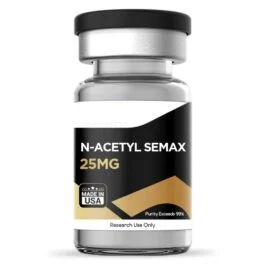
N-Acetyl Semax (25mg)


CHF57,00
N-Acetyl Semax Peptid in der Schweiz kaufen
Kaufen Sie N-Acetyl Semax Peptid, ein fortschrittliches ACTH-(4-7)-Analogon, das durch Acetylierung und einen PGP-C-Terminus verbessert wurde, um eine überlegene Durchlässigkeit der Blut-Hirn-Schranke sowie eine höhere enzymatische Stabilität zu erreichen. Im Gegensatz zu herkömmlichen Kollagenpeptiden zielt es auf das serotonerge und Enkephalin-System ab, um Neuroprotektion und kognitive Konzentration zu unterstützen. Ideal für Forschende, die sich mit ischämischer Regeneration, Angstmodulation und BDNF-vermittelter Neurogenese beschäftigen.
N-Acetyl Semax Peptid in der Schweiz kaufen | Kognitives Forschungspeptid
N-Acetyl Semax Peptid in der Schweiz kaufen ein fortschrittliches nootropisches Forschungspeptid, das umfassend hinsichtlich seiner möglichen Rolle bei kognitiver Funktion, Neuroprotektion, Neurotransmitter-Regulation und dem Transport durch die Blut-Hirn-Schranke untersucht wird. Forschende in der gesamten Schweiz beschäftigen sich zunehmend mit N-Acetyl Semax aufgrund seiner verbesserten Stabilität und optimierten Transport-Eigenschaften im Vergleich zu herkömmlichen Semax-Formulierungen.
Abgeleitet von einem Fragment des adrenokortikotropen Hormons (ACTH 4-7), kombiniert N-Acetyl Semax Acetylierungs-Technologie mit einer Pro-Gly-Pro- (PGP-) Erweiterung, um ein hochstabiles Peptid für moderne neurowissenschaftliche und neurobiologische Forschung bereitzustellen.
Schweizer Labore untersuchen dieses Peptid häufig in Studien zu Gedächtnisbildung, Aufmerksamkeitsprozessen, Neuroplastizität, ischämischen Regenerationsmodellen und Neurotransmitter-Regulation.
Was ist N-Acetyl Semax?
N-Acetyl Semax ist eine modifizierte Version von Semax, einem synthetischen Peptid, das ursprünglich für neurologische Forschung entwickelt wurde. Wissenschaftler verbesserten die ursprüngliche Peptidstruktur durch N-terminale Acetylierung und eine Pro-Gly-Pro-Erweiterung, wodurch eine höhere Resistenz gegen enzymatischen Abbau und eine verbesserte biologische Stabilität erreicht wurde.
Diese Modifikationen machen N-Acetyl Semax besonders interessant für Forschende, die sich mit Peptidtransport, Durchlässigkeit der Blut-Hirn-Schranke und Signalwegen des zentralen Nervensystems beschäftigen.
Dadurch hat sich die Verbindung zu einem wertvollen Forschungsinstrument in modernen neurowissenschaftlichen Laboren in der Schweiz und Europa entwickelt.
Wie N-Acetyl Semax wirkt
Forschende gehen davon aus, dass N-Acetyl Semax mehrere neurologische Signalwege beeinflusst, die an Lernen, Gedächtnis, kognitiver Verarbeitung und Neuroprotektion beteiligt sind.
Im Gegensatz zu vielen traditionellen Peptiden wurde N-Acetyl Semax gezielt entwickelt, um Stabilität und Zugänglichkeit zum zentralen Nervensystem zu verbessern. Daher untersuchen Wissenschaftler seine Auswirkungen auf Neurotransmitter-Aktivität, neurotrophe Faktoren und zelluläre Widerstandsfähigkeit unter neurologischem Stress.
Aktuelle Studien deuten darauf hin, dass das Peptid Einfluss haben könnte auf:
- Regulation von Neurotransmittern
- Signalwege der Neuroplastizität
- Gedächtnis- und Lernprozesse
- Neuronale Überlebensmechanismen
- Signalwege des Gehirns
- Modelle der kognitiven Leistungsfähigkeit
Der Vorteil von PGP und Acetylierung
Das entscheidende Merkmal von N-Acetyl Semax liegt in seinen strukturellen Verbesserungen. Diese Modifikationen wurden entwickelt, um die Stabilität und Effizienz des Peptidtransports zu optimieren.
Verbesserter Transport durch die Blut-Hirn-Schranke
Die Pro-Gly-Pro- (PGP-) Erweiterung kann den Transport des Peptids durch die Blut-Hirn-Schranke verbessern und macht die Verbindung dadurch besonders wertvoll für neurowissenschaftliche Forschung.
Da eine effektive Gehirnversorgung eine der größten Herausforderungen der Peptidforschung bleibt, untersuchen Wissenschaftler weiterhin die potenziellen Vorteile von N-Acetyl Semax für Studien des zentralen Nervensystems.
Verbesserte Stabilität
Die Acetylierung schützt das Peptid vor enzymatischem Abbau. Daher wird N-Acetyl Semax häufig in Studien mit längerer biologischer Aktivität und erhöhter Stabilität eingesetzt.
Neurotransmitter-Forschung
Mehrere Studien untersuchten den Zusammenhang zwischen Semax-abgeleiteten Peptiden und Neurotransmitter-Aktivität. Besonders im Fokus stehen serotoninbezogene Signalwege, Aufmerksamkeitsmechanismen und kognitive Signalnetzwerke.
Wichtige Forschungsbereiche von N-Acetyl Semax
1. Forschung zu kognitiver Funktion und Gedächtnis
N-Acetyl Semax wird häufig in Modellen untersucht, die sich mit Lernen, Gedächtnisspeicherung und Informationsverarbeitung befassen.
Aktuelle Untersuchungen analysieren, wie das Peptid Einfluss nehmen könnte auf:
- Gedächtniskonsolidierung
- Aufmerksamkeitsregulation
- Kognitive Flexibilität
- Lernleistung
- Neuronale Kommunikationswege
2. Studien zur Neuroprotektion
Neuroprotektion zählt zu den bedeutendsten Bereichen der Peptidforschung. Daher untersuchen Wissenschaftler weiterhin die potenzielle Rolle von N-Acetyl Semax beim Schutz von Neuronen vor oxidativem und metabolischem Stress.
Forschende analysieren die Verbindung in experimentellen Modellen zu:
- Reaktionen auf oxidativen Stress
- Neuronaler Widerstandsfähigkeit
- Zellulären Regenerationsmechanismen
- Hirnverletzungsforschung
- Altersbedingten neurologischen Veränderungen
3. Forschung zur ischämischen Regeneration
Mehrere neurologische Studien untersuchten Semax-abgeleitete Peptide in ischämischen Modellen. Daher bleibt N-Acetyl Semax relevant für Forschung zu Regenerationsprozessen des Gehirns und zellulären Reaktionen nach Ischämie.
Wissenschaftler erforschen weiterhin, wie Peptid-Signalwege neuronale Anpassung und funktionelle Erholung unterstützen könnten.
4. Neurotransmitter-Regulation
Forschende untersuchen N-Acetyl Semax ebenfalls hinsichtlich seines möglichen Einflusses auf Neurotransmitter-Systeme, die mit Kognition, Stimmungsregulation und Verhaltensreaktionen verbunden sind.
Aktuelle Forschung analysiert Interaktionen mit:
- Serotoninbezogenen Signalwegen
- Dopaminerger Signalübertragung
- Neurochemischem Gleichgewicht
- Aufmerksamkeitsnetzwerken
- Verhaltensneurowissenschaftlichen Modellen
5. Kardiovaskuläre und systemische Forschung
Obwohl N-Acetyl Semax hauptsächlich für neurologische Forschung bekannt ist, untersuchen Wissenschaftler auch seine mögliche Rolle bei kardiovaskulärer Anpassung und systemischer zellulärer Signalübertragung.
Diese Studien tragen zu einem umfassenderen Verständnis bei, wie neuroaktive Peptide verschiedene biologische Systeme beeinflussen können.
Chemisches Profil
- Molekülformel: C37H51N9O10S
- Molekulargewicht: 858,97 g/mol
- Struktur: Acetyl-Met-Glu-His-Phe-Pro-Gly-Pro
- Peptidklasse: Nootropisches & neuroprotektives Forschungspeptid
- Ausgangsverbindung: Semax (ACTH-4-7-Derivat)
Warum Forschende N-Acetyl Semax in der Schweiz kaufen
Die Schweiz zählt weltweit zu den führenden Standorten für Biotechnologie, pharmazeutische Innovation und neurowissenschaftliche Forschung. Deshalb benötigen Forschende hochreine Peptide, die strengen Laborstandards entsprechen und reproduzierbare wissenschaftliche Ergebnisse ermöglichen.
N-Acetyl Semax weckt weiterhin großes Interesse, da es verbesserte Stabilität, optimierte Transport-Eigenschaften und vielseitige Einsatzmöglichkeiten in unterschiedlichen Bereichen der Neurowissenschaften kombiniert.
Forschende verwenden dieses Peptid häufig in Studien zu kognitiver Leistungsfähigkeit, Neuroprotektion, Neurotransmitter-Regulation und Transportmechanismen der Blut-Hirn-Schranke.
Qualitätsstandards Schweizer Labore
Forschende, die N-Acetyl Semax Peptid in der Schweiz kaufen, legen großen Wert auf Reinheit, Konsistenz und analytische Verifizierung. Hochwertige Peptidverbindungen sollten daher strenge Testverfahren wie HPLC- und Massenspektrometrie-Analysen durchlaufen.
Bei Swiss Peptide Lab konzentrieren wir uns auf Peptidqualität in Laborqualität, zuverlässige Beschaffung und analytische Transparenz zur Unterstützung professioneller Forschungsumgebungen.
Wichtiger Forschungshinweis
N-Acetyl Semax Peptid ist ausschließlich für Labor- und wissenschaftliche Forschungszwecke bestimmt. Es ist nicht für den menschlichen Verzehr, veterinärmedizinische Anwendungen, medizinische Behandlungen oder diagnostische Zwecke zugelassen.
Diese Verbindung wird ausschließlich für kontrollierte Forschungs- und Bildungszwecke bereitgestellt.
Schreiben Sie die erste Rezension für «N-Acetyl Semax (25mg)»
Ähnliche Produkte
Muskelaufbau- & Leistungspeptide in der Schweiz

Kognitive & Nootropische Peptide
Muskelaufbau- & Leistungspeptide in der Schweiz
Kognitive & Nootropische Peptide
Fettabbau- & Stoffwechselpeptide Schweiz

Kognitive & Nootropische Peptide
Muskelaufbau- & Leistungspeptide in der Schweiz
Langlebigkeits- & Zellgesundheitspeptide in der Schweiz
Rezensionen
Es gibt noch keine Rezensionen.