
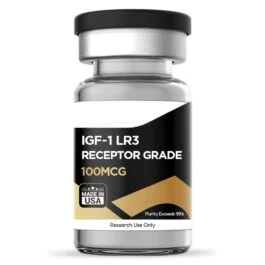
Receptor Grade IGF-1 LR3 (100mcg)
CHF26,60
Receptor Grade IGF-1 LR3 (Long R3) ist ein hochreines 83-Aminosäuren-Analog von IGF-1, das für maximale Bioverfügbarkeit entwickelt wurde. Durch das Umgehen der IGF-Bindungsproteine bietet es eine deutlich höhere anabole Potenz im Vergleich zu standardmäßigen Wachstumsfaktoren. Ideal für Forscher, die was sind Peptide mit fortgeschrittenen Zellwachstums-Modulatoren vergleichen und die Zukunft der metabolischen Signalübertragung erforschen.
IGF-1 LR3 in der Schweiz kaufen | Receptor Grade Long R3 IGF-1
IGF-1 LR3 in der Schweiz kaufen (Long R3 IGF-1) gehört zu den am intensivsten untersuchten Wachstumsfaktor-Analoga in der modernen Peptidforschung. Forscher in der ganzen Schweiz nutzen IGF-1 LR3 in fortgeschrittenen Labormodellen für Zellwachstum, anabole Signalübertragung, Glukosestoffwechsel, Gewebeentwicklung und Rezeptor-Bindungsuntersuchungen.
Abgeleitet vom Insulin-like Growth Factor-1 (IGF-1), verfügt die Long R3-Variante über eine modifizierte Aminosäurestruktur, die speziell entwickelt wurde, um die biologische Aktivität zu verbessern und die Interaktion mit IGF-Bindungsproteinen (IGFBPs) zu reduzieren. Dadurch können Forscher eine verlängerte Rezeptoraktivierung und verstärkte Signaldynamik in kontrollierten experimentellen Settings untersuchen.
Aufgrund seiner einzigartigen Eigenschaften bleibt IGF-1 LR3 ein wertvolles Werkzeug in der Biotechnologie, Zellkulturforschung, metabolischen Untersuchungen und Studien zu Wachstumsfaktor-Signalwegen.
Was ist Receptor Grade IGF-1 LR3?
IGF-1 LR3 ist ein 83-Aminosäuren-Analog des natürlich vorkommenden IGF-1. Forscher entwickelten diese modifizierte Version durch die Hinzufügung einer 13-Aminosäuren-Erweiterung am N-Terminus sowie den Austausch von Arginin an Position drei.
Diese Modifikationen reduzieren die Bindung an IGF-Bindungsproteine erheblich und erhöhen die Menge an freiem IGF-1 LR3, das mit zellulären Rezeptoren interagieren kann. Dadurch wählen Wissenschaftler Long R3 IGF-1 häufig für Studien zur verlängerten Wachstumsfaktor-Signalübertragung und Rezeptoraktivierung.
Im wachsenden Schweizer Biotechnologiesektor erhält IGF-1 LR3 zunehmend Aufmerksamkeit, da es Forschern ein zuverlässiges Modell zur Untersuchung von Zellproliferation, anabolen Signalwegen und Stoffwechselregulation bietet.
Warum Forscher IGF-1 LR3 wählen
Moderne Peptidforschung konzentriert sich zunehmend auf Substanzen mit erhöhter Rezeptoraktivität und verlängerter Signaldauer. Daher wählen Forscher häufig IGF-1 LR3, da es im Labor mehrere Vorteile gegenüber nativen IGF-1 bietet.
- Reduzierte Bindung an IGF-Bindungsproteine (IGFBPs)
- Verlängerte biologische Aktivität
- Erhöhte Rezeptorverfügbarkeit
- Starke Relevanz in PI3K/Akt-Signalweg-Studien
- Breit untersuchtes Wachstumsfaktor-Analog
- Geeignet für fortgeschrittene Zellkulturuntersuchungen
Wirkmechanismus (forschungsbasiert)
Der wichtigste wissenschaftliche Vorteil von IGF-1 LR3 liegt in seiner reduzierten Interaktion mit IGF-Bindungsproteinen. Unter normalen biologischen Bedingungen regulieren diese Proteine die Verfügbarkeit von zirkulierendem IGF-1 und begrenzen sie.
Long R3 IGF-1 zeigt jedoch eine deutlich geringere Affinität zu diesen Bindungsproteinen. Dadurch beobachten Forscher in experimentellen Modellen eine erhöhte Rezeptorverfügbarkeit und verlängerte Signalaktivität.
Nach der Bindung an den IGF-1-Rezeptor kann das Peptid mehrere intrazelluläre Signalwege aktivieren, die an Wachstum, Stoffwechsel und zellulärer Anpassung beteiligt sind.
Häufig untersuchte Bereiche sind:
- IGF-1-Rezeptoraktivierung
- PI3K/Akt-Signalwege
- AMPK-abhängige Stoffwechselregulation
- Zellwachstum und Proliferation
- Proteinsynthese-Mechanismen
- Glukosetransport-Studien
Wichtige Forschungsanwendungen von IGF-1 LR3
1. Zellwachstum & Proliferationsforschung
Forscher untersuchen IGF-1 LR3 häufig in Studien zu Zellwachstum, Differenzierung und Proliferation. Da das Peptid direkt auf IGF-1-Rezeptoren wirkt, dient es als wertvolles Modell zur Untersuchung wachstumsfaktorvermittelter biologischer Reaktionen.
Zusätzlich nutzen Wissenschaftler Long R3 IGF-1, um zelluläre Anpassung und Signaleffizienz in verschiedenen Labormodellen zu analysieren.
2. Anabole Signalstudien
IGF-1 LR3 spielt eine bedeutende Rolle in der Forschung zu anabolen Signalwegen. Wissenschaftler untersuchen häufig, wie Wachstumsfaktor-Signale die Proteinsynthese, Nährstoffverwertung und Gewebeentwicklung beeinflussen.
Darüber hinaus analysieren Forscher die Wechselwirkungen mit intrazellulären Signalwegen, die Zellwachstum und Stoffwechseleffizienz regulieren.
3. Stoffwechsel- & Glukoseforschung
Das Peptid wird auch intensiv in der Untersuchung von Glukosetransport und Stoffwechselsignalen verwendet. Forschungsergebnisse deuten darauf hin, dass die Aktivierung von PI3K- und AMPK-Signalwegen die zelluläre Glukoseaufnahme und Energieverwertung beeinflussen kann.
Daher wird IGF-1 LR3 häufig in metabolischen Forschungsmodellen zur Untersuchung von Nährstoffsignalen und Energiehomöostase eingesetzt.
4. Zellkultur- & Rezeptorbindungsstudien
Aufgrund seiner verlängerten Aktivität und starken Rezeptoraffinität ist IGF-1 LR3 besonders wertvoll in Rezeptorbindungsstudien und fortgeschrittener Zellkulturforschung.
Forscher verwenden Receptor Grade Material häufig zur Bewertung von Signalwegen, Wachstumsfaktor-Interaktionen und zellulären Reaktionsmechanismen unter kontrollierten Laborbedingungen.
Receptor Grade vs. Standard-Forschungsmaterial
Receptor Grade IGF-1 LR3 steht für einen höheren Forschungsstandard, der für anspruchsvolle Laboranwendungen entwickelt wurde. Forscher bevorzugen häufig Receptor-Grade-Peptide, wenn Reinheit, Konsistenz und Reproduzierbarkeit entscheidend sind.
Daher wird diese Qualitätsstufe häufig für Rezeptorbindungs-Assays, Wachstumsfaktor-Forschung und komplexe Zellkulturexperimente verwendet.
Chemisches Profil
- Molekulare Formel: C400H625N111O115S9
- Molekulargewicht: 9117.5 g/mol
- Peptidlänge: 83 Aminosäuren
- Alternative Namen: Long R3 IGF-1, LR3-IGF-1
- Kategorie: Wachstumsfaktor-Forschungspeptid
Warum IGF-1 LR3 in der Schweiz kaufen?
Die Schweiz ist weltweit bekannt für ihre Exzellenz in Biotechnologie, pharmazeutischer Entwicklung und Life-Science-Innovation. Daher legen Forscher, die Peptide in der Schweiz beziehen, besonderen Wert auf Reinheit, analytische Transparenz und zuverlässige Qualitätsstandards.
Bei Swiss Peptide Lab konzentrieren wir uns auf die Bereitstellung von Labor-Forschungssubstanzen mit strenger Qualitätskontrolle und fortschrittlicher analytischer Verifizierung.
Unser Anspruch an Konsistenz und Forschungsqualität macht uns zu einer vertrauenswürdigen Quelle für Peptidforschung in der Schweiz und Europa.
Wichtiger Forschungshinweis
Receptor Grade IGF-1 LR3 ist ausschließlich für Labor- und wissenschaftliche Forschungszwecke bestimmt. Dieses Produkt ist nicht für den menschlichen Verzehr, tierärztliche Anwendungen, Diagnostik oder medizinische Behandlungen zugelassen.
Alle Produkte werden ausschließlich für Bildungs-, Analyse- und kontrollierte Forschungszwecke bereitgestellt.
Schreiben Sie die erste Rezension für «Receptor Grade IGF-1 LR3 (100mcg)»
Ähnliche Produkte
Fettabbau- & Stoffwechselpeptide Schweiz
Muskelaufbau- & Leistungspeptide in der Schweiz

Muskelaufbau- & Leistungspeptide in der Schweiz
Muskelaufbau- & Leistungspeptide in der Schweiz

Muskelaufbau- & Leistungspeptide in der Schweiz
Kognitive & Nootropische Peptide
Muskelaufbau- & Leistungspeptide in der Schweiz
Muskelaufbau- & Leistungspeptide in der Schweiz
Rezensionen
Es gibt noch keine Rezensionen.