Description
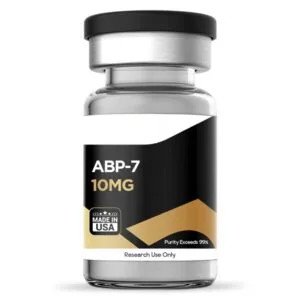
Buy ABP-7 Peptide Online (TB-500 Fragment) – Research Compound
Overview
Buy ABP-7 Peptide Online, also known as the TB-500 fragment, is a synthetic heptapeptide derived from a functional segment of Thymosin Beta-4. It is composed of the amino acid sequence Ac-LKKTETQ and is produced using solid-phase peptide synthesis for research applications.
This short peptide sequence is considered the core actin-binding region of Thymosin Beta-4, which has made ABP-7 an important subject of study in cellular biology and regenerative research models. Its main scientific interest lies in how it may interact with actin, a key structural protein involved in cell shape, movement, and tissue organization.
Chemical Profile
- Molecular Formula: C38H81N9O20
- Molecular Weight: 889.5 g/mol
- Sequence: Ac-LKKTETQ
- Other Names: TB-500 Fragment, Actin Binding Peptide-7
Mechanism of Action (Research-Based)
ABP-7 is believed to interact with actin, a fundamental component of the cytoskeleton responsible for maintaining cellular structure and enabling movement.
Research suggests that ABP-7 Peptide for Sale here may bind to globular actin (G-actin), influencing its conversion into filamentous actin (F-actin). By modulating this process, it may affect how cells reorganize their internal structure, migrate, and respond to environmental signals.
Because actin dynamics are central to many biological processes, ABP-7 is studied for its potential role in:
- Cell migration and movement
- Cytoskeletal remodeling
- Intracellular signaling pathways
- Tissue regeneration models
Key Research Areas of ABP-7 Peptide for Sale here
1. Wound Healing & Tissue Repair Models
Studies in animal models suggest that ABP-7 may support processes linked to tissue repair. Researchers have observed potential effects on:
- Keratinocyte migration
- Collagen deposition
- Wound closure dynamics
These effects are believed to be linked to changes in cytoskeletal organization, which can influence how quickly cells move into damaged areas during repair processes.
2. Cellular Migration & Regeneration
ABP-7 has been studied for its role in cell motility, a key factor in tissue regeneration. By influencing actin availability, it may affect how efficiently cells:
- Move across tissue matrices
- Adapt shape during migration
- Participate in regeneration pathways
This makes it a compound of interest in experimental models involving tissue remodeling and repair biology.
3. Fibrosis and Tissue Remodeling Research
Emerging studies suggest ABP-7 may influence pathways associated with fibrotic activity. It has been investigated for potential effects on:
- PDGF signaling pathways
- Collagen type I expression
- α-SMA marker activity
- Akt phosphorylation cascades
These pathways are involved in the activation of fibrogenic cells, making ABP-7 relevant in studies exploring abnormal tissue remodeling and scar formation.
4. Angiogenesis Research
ABP-7 Peptide for Sale is also being explored for its possible role in angiogenesis, the formation of new blood vessels. Experimental models suggest it may influence endothelial cell behavior, including:
- Cell migration
- Tube formation
- Early vessel sprouting
This is thought to occur through cytoskeletal modulation, which affects how endothelial cells organize and form vascular structures.
Scientific Significance
ABP-7 Peptide for Sale here is widely studied because it represents a minimal functional fragment of Thymosin Beta-4’s actin-binding domain. This makes it useful for researchers aiming to isolate and understand how actin regulation influences:
- Cellular repair mechanisms
- Tissue remodeling processes
- Structural organization within cells
Its relatively simple structure also makes it a valuable tool for studying actin-related signaling pathways in controlled laboratory environments.
Important Note
ABP-7 Peptide for Sale here is intended strictly for laboratory and research use only. It is not approved for human or veterinary use, diagnosis, or treatment.
ABP-7 (TB-500 Fragment) offers researchers a focused model for studying actin dynamics, tissue repair mechanisms, and cellular migration pathways in controlled experimental settings.
Reviews
There are no reviews yet.