Description
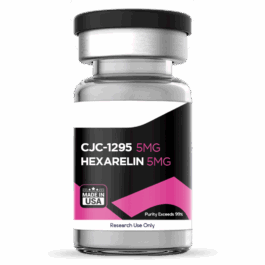
Buy CJC-1295 no DAC & Hexarelin Blend – Advanced Research Compound
Overview
Buy CJC-1295 no DAC & Hexarelin a dual-action peptide blend developed for advanced research into growth hormone signaling and pituitary function. What makes this combination especially interesting is how each peptide targets different receptor systems, offering a broader and more dynamic approach to studying hormone release mechanisms.
CJC-1295 no DAC for sale here, a modified version of growth hormone-releasing hormone (GHRH), is designed to interact with GHRH receptors on pituitary cells. Hexarelin peptide blend, on the other hand, belongs to a separate class of peptides known as growth hormone secretagogues (GHS), which act through ghrelin-sensitive receptors (GHS-R1a).
Because these two pathways operate independently but converge on the same growth hormone-producing cells, researchers are increasingly interested in this blend for its potential synergistic signaling effects.
Chemical Profile
CJC-1295 (no DAC)
- Also Known As: Modified GRF 1-29
- Molecular Formula: C152H252N44O42
Hexarelin
- Also Known As: Examorelin, P-23905
- Molecular Formula: C47H58N12O6
Mechanism of Action
CJC-1295 (no DAC) – GHRH Pathway Activation
CJC-1295 (no DAC) is engineered from the first 29 amino acids of natural GHRH, with targeted modifications to improve stability and receptor interaction.
Research suggests it may:
- Bind to GHRH receptors on pituitary cells
- Activate cAMP signaling pathways
- Stimulate protein kinase A (PKA)
- Increase calcium influx in somatotroph cells
This cascade may promote both growth hormone release and increased synthesis capacity, making it a key component in GH-related research.
Hexarelin – GHS Pathway Activation
Hexarelin works through a completely different mechanism by targeting GHS-R1a receptors, which are also responsive to ghrelin.
Its signaling pathway may involve:
- Activation of phospholipase C (PLC)
- Production of IP₃ and DAG messengers
- Release of intracellular calcium
- Activation of protein kinase C (PKC)
This results in a rapid and strong pulse of growth hormone release, typically observed shortly after exposure in experimental models.
Research Insights Before You Buy CJC-1295 no DAC & Hexarelin
Growth Hormone Release Potential
Studies on CJC-1295 (no DAC) indicate:
- Up to 70–100% increase in GH output over extended observation periods
- Significant peaks within the first 2 hours
- Increased IGF-1 levels (~27% in some models)
Hexarelin research shows:
- Rapid GH spikes reaching significantly higher levels than baseline
- Peak response within 30–40 minutes
- Short but potent secretion cycles
Synergistic Potential
Although direct studies on this exact combination are limited, research on similar pairings (GHRH analogs + GHS peptides) suggests a powerful interaction.
When both receptor systems are activated simultaneously:
- Growth hormone output may exceed individual peptide effects
- Combined signaling may produce greater-than-additive responses
- Pituitary cells may respond with amplified secretion patterns
This makes the blend particularly valuable for researchers studying multi-pathway endocrine signaling.
Why Researchers Choose This Blend
- Dual-pathway activation (GHRH + GHS receptors)
- Studied for synergistic hormone signaling
- Combines sustained release (CJC-1295) with rapid pulses (Hexarelin)
- Ideal for advanced endocrine and pituitary research models
Applications in Research
This peptide blend is commonly explored in studies related to:
- Growth hormone dynamics
- IGF-1 signaling pathways
- Pituitary cell function
- Hormonal pulse patterns and regulation
- Multi-receptor endocrine interactions
Final Note
Buy CJC-1295 no DAC & Hexarelin which represents a strategic combination for researchers aiming to explore how different signaling pathways can work together to influence hormone production. By targeting both GHRH and GHS receptor systems, this blend offers a more complete model for studying pituitary-driven processes.
Reviews
There are no reviews yet.